
As a driving force in the global agricultural landscape, the horticulture industry is constantly evolving to address market demands and capitalize on new opportunities. Embracing innovative solutions, emerging markets in horticulture, and adapting to global shifts, the future of the horticulture industry looks promising and dynamic. In this article, I’ll explore the latest trends in horticulture, including the adoption of cutting-edge technologies, shifts in consumer preferences, and the push for sustainability.
Key Takeaways
- E-commerce growth and effective online sales strategies are driving expansion in the horticulture industry.
- Emphasis on innovative solutions such as vertical and indoor farming methods and smart technologies like AI and robotics are transforming production and operations.
- Consumers are increasingly seeking fresh, locally sourced produce, leading to a surge in hyperlocal production.
- Sustainability and green initiatives are becoming central to the horticulture industry’s long-term success.
- Addressing labor market challenges, supply chain optimization, and enhancing customer experiences are key focal points for businesses in the sector.
Continued Growth and Expansion
The horticulture industry is set to experience significant growth, with an estimated market increase from $8.4 million to over $11 million within five years. Factors contributing to this expansion include the rising popularity and adoption of e-commerce, advancements in technology, and evolving sustainable practices. The sector is becoming adaptive and resilient, integrating cutting-edge solutions to drive profitability and cater to a burgeoning consumer base that seeks quality and sustainability.
As a reflection of these horticulture industry trends, there has been an increased focus on implementing sustainable practices in horticulture. Businesses are embracing environmentally friendly technologies and production methods that conserve resources and reduce waste, ultimately benefiting both the industry and the planet.
Simultaneously, various technological advancements in horticulture have greatly influenced the industry’s growth. These innovations range from smart greenhouse systems and precision agriculture technologies to automation and artificial intelligence (AI). Adoption of these advancements enables growers to optimize production, minimize labor expenses, and increase overall efficiency within their operations.
- Smart greenhouse systems: Utilizes automation, climate control, and advanced monitoring systems to create optimal growing conditions, reducing energy consumption and resource waste.
- Precision agriculture technologies: Employs sensors, drones, and GPS technology to more accurately apply water, fertilizer, and other inputs, optimizing resource use and minimizing environmental impact.
- Automation and AI: Integrates robotics, machine learning, and automation to drive efficiencies and cost savings, leading to increased crop production and reduced reliance on manual labor.
In conclusion, the continued growth and expansion of the horticulture industry can be attributed to the convergence of evolving technology, sustainable practices, and a wide-reaching e-commerce presence. These developments are steering the sector towards greater profitability and resilience, ultimately positioning it for long-term success.
Elevating Businesses with E-commerce in Horticulture

The horticulture industry is leveraging e-commerce as a key growth area, focusing on creating powerful online sales strategies. With the onset of the COVID-19 pandemic, buyer habits have shifted towards purchasing online, and horticulture businesses must develop strategies that include detailed product information, global reach, and quick responses to market demands. This includes establishing an online presence that ranges from websites to engaging platforms like Instagram and TikTok.
Creating an Effective Online Sales Strategy
- Optimized product listings: An effective online sales strategy starts with thorough product listings, including high-quality images, detailed descriptions, intuitive navigation, and accurate inventory management.
- Streamlined user experience: Ensure the website or e-commerce platform is easy to navigate, has a responsive design, and simple checkout to minimize cart abandonment.
- Diversified marketing channels: Utilize various digital marketing channels such as email marketing, search engine optimization (SEO), and pay-per-click advertising to drive targeted traffic to the website.
- Personalized customer interactions: Utilize customer data to customize marketing messages and nurture long-term customer relationships.
- Utilize analytics: Make data-driven decisions by tracking website performance, customer behavior, and other key performance indicators to optimize growth strategies.
Bridging the Digital Gap: The Rise of Plant-Related Social Media Communities
The transition to e-commerce has prompted horticulture businesses to bridge the digital gap through platforms like #PlantTok on TikTok. This grouping of plant enthusiasts shares quick video tips on plant care, aiming to create a sense of community and establish customer loyalty. These online communities provide an innovative channel for businesses to expand their reach and influence within the industry.
| Platform | Benefits for Horticulture Businesses |
|---|---|
|
|
| TikTok |
|
|
|
|
Incorporating e-commerce growth strategies and utilizing social media communities in the horticulture industry can drive sales, expand reach, and strengthen customer relationships. Businesses that adapt to evolving consumer demands and embrace digital marketing channels are poised for success in this dynamic and growing market.
Customer Experience as a Competitive Edge
In today’s fast-paced horticulture industry, businesses must prioritize customer experience in order to gain a competitive edge. With the rise of online retail and increasing competition, it has become essential for businesses to focus on providing a seamless journey for their customers, from inquiry to satisfaction. A study by Bloomberg BusinessWeek found that customers are willing to pay a 13 percent price premium for an excellent customer experience, further stressing the importance of personalization and customer satisfaction.
To excel in customer experience, horticulture businesses should consider adopting the following strategies:
- Offering personalized and knowledgeable advice on plant care and selection.
- Providing exceptional post-purchase support, such as follow-up emails and access to helpful resources.
- Implementing user-friendly website navigation and seamless online shopping experiences.
- Optimizing response times to customer inquiries and resolving issues efficiently.
- Engaging customers through social media, newsletters, and loyalty programs.
Recognizing the importance of customer experience in driving sales and establishing brand loyalty, many horticulture businesses have successfully differentiated themselves by offering unique shopping experiences, expert advice, and exceptional customer service. For example, The Sill, a popular online plant retailer, offers free access to a team of plant-care experts for personalized support, ensuring customers feel confident in their purchases and are equipped to properly care for their plants.
Implementing these customer-centric strategies not only sets businesses apart from their competitors but also fosters long-term success in the horticulture industry.
| Company | Business Model | Notable Features |
|---|---|---|
| The Sill | Online plant retailer | Free access to plant-care experts, engaging social media presence, and helpful resources |
| Plant People | Subscription-based plant delivery service | Personalized plant recommendations, carefully curated plant selections, and flexible delivery options |
| Greensgrow Farms | Urban farm and community center | Educational workshops, community outreach, and on-site plant sales |
The Rise of Vertical and Indoor Farming Methods
The horticulture sector is witnessing a significant shift in production methods, with vertical farming in horticulture and indoor farming technologies becoming mainstream. These innovative cultivation styles enable growers to maximize space, cultivate crops year-round, and utilize techniques such as hydroponics and aeroponics.
According to the Greenhouse Management 2022 State of the Industry report, growers plan to increase edible crop and perennial plants by 30 percent, marking a strong pivot to vertical and indoor farming methods. The following table outlines some key benefits of adopting these modern farming practices:
| Aspect | Benefits |
|---|---|
| Space utilization | Maximizes available space by stacking growing surfaces vertically |
| Year-round cultivation | Allows for the growth of crops regardless of seasonal changes and weather conditions |
| Water usage | Uses less water than traditional farming methods due to efficient irrigation systems like hydroponics and aeroponics |
| Pesticide reduction | Reduced incidence of pests and diseases enables lower pesticide usage |
| Increased yield | Higher crop outputs due to improved climate control and crop management |
Adopting vertical farming and indoor farming technologies allows the horticulture industry to not only remain competitive but also address the growing global demand for fresh produce.
Some noteworthy examples of vertical farming in horticulture include the operations of companies like AeroFarms, Plenty, and Sky Greens. These businesses showcase the potential for large-scale, sustainable, and efficient crop production in urban environments, revolutionizing the way we approach farming in the modern world.
- AeroFarms: A Newark-based indoor farming company that utilizes aeroponic growing technology.
- Plenty: A San Francisco-based ag-tech company that specializes in vertical farming and hydroponic technologies.
- Sky Greens: A Singapore-based vertical farming organization that focuses on urban high-rise, high-density farming solutions.
In conclusion, the rise of vertical and indoor farming methods, driven by the need for efficient, sustainable, and high-quality crop production, represents a milestone in the evolution of the horticulture industry. Embracing these technologies not only ensures the sector’s growth and viability but also contributes to a greener and more sustainable future for all.
Leveraging Smart Technology and AI
The integration of robotics and automation in greenhouses is quickly becoming an essential aspect of modern horticulture operations. These technological advancements contribute to higher quality crops, increased production, and reduction in labor costs. With the growing emphasis on sustainability, efficiency, and cost-effectiveness, greenhouses are increasingly adopting autonomous systems to enhance crop production and achieve higher profit margins.

Integration of Robotics and Automation in Greenhouses
Recent innovations in greenhouse automation and the use of robotics in horticulture have led to the development of streamlined and efficient growing systems. Examples of these advancements include automated irrigation systems, climate control software, and robotic laborers that can monitor and maintain crop health.
These solutions not only drive efficiency within the greenhouse environment but also have a positive impact on resource conservation. For instance, automated irrigation systems can optimize water usage and reduce waste, while climate control software and smart sensors can maintain optimal temperature and humidity levels for each crop, leading to reduced energy consumption and greenhouse gas emissions.
- Automated irrigation systems
- Climate control software
- Robotic laborers for crop monitoring and maintenance
These technological innovations demonstrate the horticulture industry’s commitment to incorporating environmentally friendly and efficient practices into their operations.
Impact of AI on Crop Production and Profit Margins
Artificial intelligence (AI) is revolutionizing crop production by offering new insights and optimization opportunities for growers. The use of AI in horticulture allows for better decision-making, improved efficiency, and increased profitability.
Data-driven approaches facilitated by AI can assist in:
- Optimizing growing conditions
- Identifying potential pests and diseases
- Predicting market trends and consumer preferences
- Enhancing production efficiency
Growers who adopt AI for crop production can expect to see improved crop quality and yields, increased operational efficiency, and ultimately, higher profit margins.
| Traditional Horticulture Practices | AI-Enhanced Horticulture Practices |
|---|---|
| Manual monitoring of crop health | Automated sensors and data analysis for precise crop monitoring |
| Time-consuming labor-intensive tasks | Efficient robotic laborers to handle routine activities |
| Reactive pest and disease management | Proactive identification and management of pests and diseases |
| Less accurate yield predictions | Improved yield predictions based on data-driven models |
As the horticulture industry continues to evolve, leveraging smart technology and AI will be crucial for growers to maintain competitiveness and meet the increasing demands of today’s modern world.
Addressing Labor Market Challenges
The horticulture industry has faced significant labor market challenges in recent years, such as shortages and the need for skilled workers. Nevertheless, there is evidence of gradual improvement as businesses adapt their operations to the current economy. Technological solutions, including automation and AI, play a crucial role in reducing reliance on manual labor and streamlining processes, ultimately benefiting the horticulture industry employment landscape.
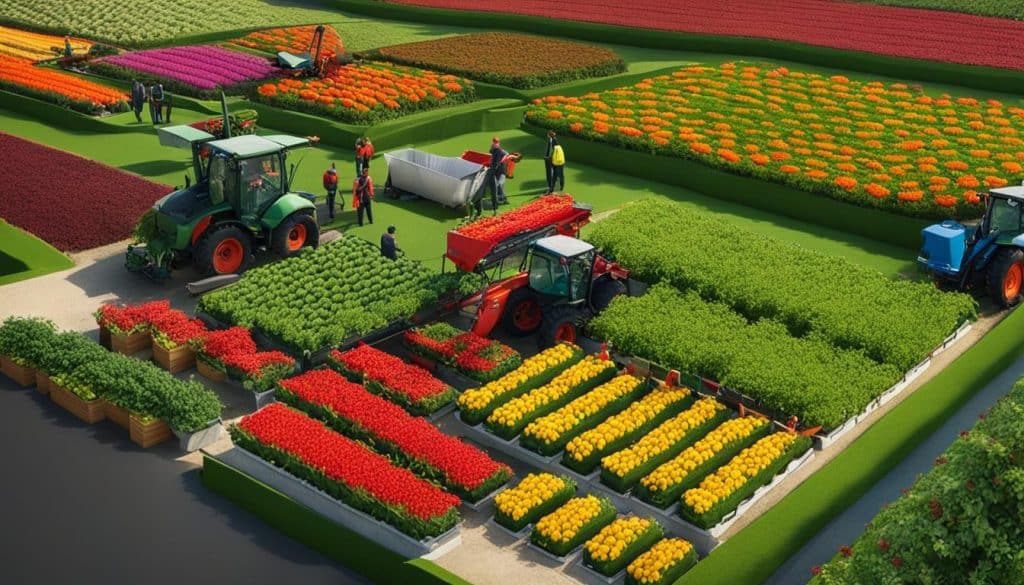
As the demand for skilled labor in the horticulture industry grows, stakeholders are introducing targeted measures to address the prevailing labor market challenges. Some of these include:
- Investing in workforce training and skills development programs
- Offering attractive compensation packages to attract and retain talent
- Partnering with educational institutions to create horticulture-focused curricula and on-the-job training opportunities
Moreover, businesses are leveraging advanced technologies to optimize operations and minimize dependency on manual labor. Some prominent examples include:
- Robotic assistance and automation in greenhouses for planting, harvesting, and packaging processes
- Precision irrigation systems equipped with sensors and AI to optimize resource usage
- Smart greenhouse management software that utilizes machine learning algorithms for climate control and operational efficiency
Embracing these novel practices has led to impressive results, such as better crop yields and reduced labor costs. Consequently, the horticulture industry’s labor market outlook has improved, paving the way for continued growth and innovation in the face of modern-day challenges.
In conclusion, the labor market in the horticulture industry is witnessing a gradual yet promising transformation. By prioritizing workforce development, improving wages and working conditions, and capitalizing on cutting-edge technologies, the industry can overcome its labor market challenges, secure a stable employment environment, and pave the way for long-term, sustainable growth.
Supply Chain Innovations
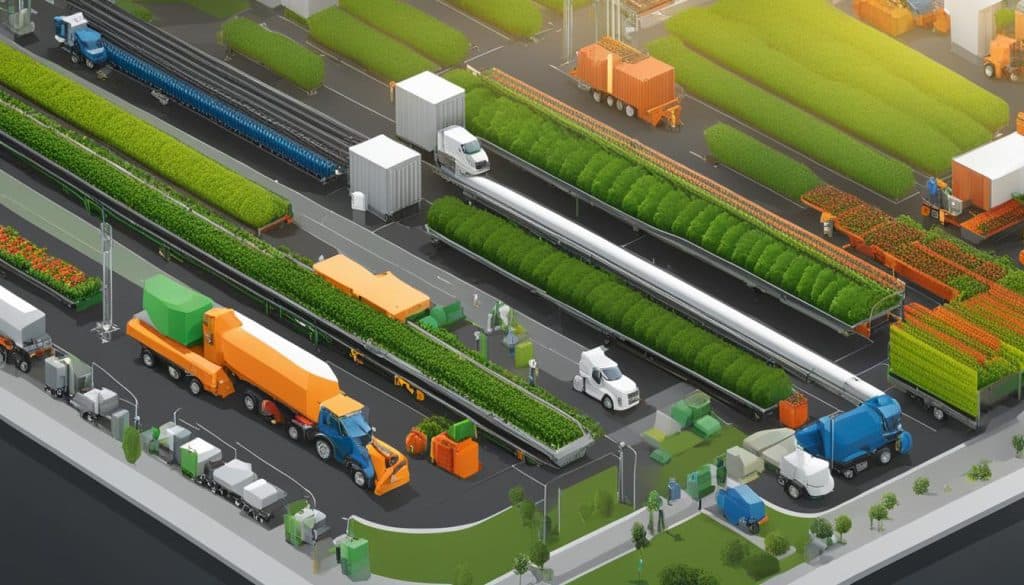
The horticulture industry is constantly striving to improve efficiency and profitability by optimizing its supply chain. With increasing demands, it has become vital to implement innovative solutions that overcome challenges, streamline operations, and reduce delays in the market.
One key aspect of supply chain optimization in horticulture is the adoption of new technologies and practices to enhance the entire process, from production to transportation and consumer-ready products. By implementing these strategies, the horticulture industry can better cope with the rising demand while effectively managing resource allocation.
Improving Efficiency and Reducing Delays
Efficiency is paramount to success in the highly competitive horticulture market. There are several ways to achieve this goal, such as:
- Utilizing blockchain technology for secure and transparent transactions
- Implementing predictive analytics to anticipate and manage risks
- Developing improved logistic strategies for optimal routing and distribution
These advancements contribute to a more streamlined and efficient supply chain, capable of adapting to fluctuating market demands and reducing delays.
| Technology | Application in Horticulture Supply Chain |
|---|---|
| Blockchain | Ensuring secure, transparent, and efficient tracking of products throughout the supply chain |
| Predictive Analytics | Utilizing data to predict and address potential risks and disruptions, ensuring smooth operations |
| Improved Logistic Strategies | Optimizing routing, transportation, and distribution to reduce delays and cater to the evolving market demands |
In conclusion, supply chain innovation is essential for navigating the complex horticulture market. By leveraging new technologies and logistic strategies, the industry can overcome challenges and improve efficiency, ultimately reducing delays and ensuring a positive outcome for all stakeholders.
New Markets and Consumer Preferences
The horticulture industry is experiencing a significant shift in consumer preferences toward fresh, locally grown foods. These preferences are driving the exploration of indoor and urban farming solutions that can cater to this demand. Innovative approaches, such as living produce sections in retail environments and farm-anywhere methods, are reshaping how consumers access fresh produce and are bringing light to the evolution of new market segments in horticulture.
One major component of this trend is the integration of living produce sections within retail environments. These sections offer a unique experience for consumers to purchase plants as they grow, fostering a deeper connection between the customer and the source of their produce. This practice not only showcases the freshness of the products but also enables a more sustainable approach by reducing waste and transportation costs.
Another exciting development is the rise of farm-anywhere solutions. These solutions allow for the cultivation of fresh produce in unconventional spaces, such as rooftops, walls, and even indoor spaces. This approach creates new opportunities for local cultivation and the possibility of more regular access to fresh produce for urban dwellers.
Consumer preferences in horticulture
are also reflected in the growing interest in organic, pesticide-free products, which has contributed to the rise of alternative farming methods with a focus on sustainability. These methods include hydroponics, aquaponics,
and aeroponics, which require less water and soil, reducing the environmental impact associated with traditional farming practices.
As these emerging markets in horticulture continue to shape the future of the industry, it’s crucial for businesses to adapt their strategies and creatively approach the expanding consumer demands. By embracing new solutions and ensuring the needs of the target audience are met, businesses can stay ahead of the curve and capitalize on the growth potential of these innovative markets.
Green Initiatives and Sustainability
As the demand for eco-friendly practices grows, sustainability in horticulture has become a main driver for innovation in the industry. With a focus on mitigating environmental impacts, key players in the field are adopting green initiatives to minimize food waste, promote responsible sourcing, and implement environmentally friendly technologies.
These transformative, sustainable practices translate into a healthier ecosystem while addressing the global call for conservation and responsible production. Let’s explore some of these advancements in horticultural sustainability:
- Water conservation and efficient irrigation
- Reducing greenhouse gas emissions
- Biodegradable materials for sustainable packaging
- Organic farming and reducing pesticide use
- Closed-loop systems to recycle resources
Sustainable Practices Transforming the Horticulture Industry
There are several companies and organizations making strides in the realm of green initiatives in horticulture. Here are a few examples:
| Organization | Initiative | Impact |
|---|---|---|
| Floricultura | Eco-friendly packaging | Reduced plastic waste and carbon footprint |
| Plenty | Vertical farming | 95% less water usage and higher crop yields |
| Solexel | Solar-powered greenhouses | Renewable energy source and reduced energy costs |
| AppHarvest | Regional food supply | Lower food miles and support for local economies |
As the horticulture industry continues to evolve, the inclusion of sustainable practices will remain integral to progress. Embracing these green initiatives not only contributes to the wellbeing of the environment but also ensures the industry remains competitive and resilient in an ever-changing global landscape.
Conclusion
In closing, the future of the horticulture industry is marked by innovation, growth, and adaptability, reflecting in the latest insights and horticulture trends. Key drivers shaping the sector include sustainable practices, cutting-edge technologies, emphasis on customer experience, and effective online sales strategies. By adapting to challenges in labor markets and supply chains, the industry is not only demonstrating resilience but also focusing on sustainable expansion.
The horticulture industry is in the midst of an e-commerce revolution, catering to the needs of modern consumers by leveraging digital platforms and meaningful online interactions. This shift is accompanied by a move towards hyperlocal production and the ongoing embrace of sustainability, environmentally friendly measures, and green initiatives. These trends, combined with groundbreaking technologies like AI and vertical farming, are indicative of a vibrant and robust industry.
As businesses continue to explore new markets and innovative solutions, the horticulture sector will evolve and thrive. With its growth trajectory set firmly on a path of innovation, efficiency, and customer-centric experiences, the future of the horticulture industry appears bright and promising.
FAQ
What are the significant growth factors for the horticulture industry?
Major factors contributing to the industry’s growth are e-commerce adoption, technological advancements, sustainable practices, and evolving customer preferences.
How is e-commerce shaping the horticulture industry?
With the increased popularity of online shopping, businesses are creating online sales strategies, leveraging social media platforms, and enhancing customer experience to stay competitive.
What role does customer experience play in the horticulture industry?
In an increasingly competitive market, providing exceptional customer experience has become vital for businesses to differentiate themselves, foster customer loyalty, and drive sales.
How has the adoption of vertical and indoor farming impacted the horticulture industry?
Vertical and indoor farming practices have allowed growers to maximize space, cultivate crops year-round, and employ innovative techniques like hydroponics and aeroponics, resulting in increased production and efficiency.
What are some smart technology and AI applications in the horticulture industry?
AI and smart technology applications include automation, robotics, and data-driven approaches to optimize growing conditions, predict market trends, and ultimately improve crop quality and yields.
How is the horticulture industry addressing labor market challenges?
The industry is incorporating technological solutions like automation and AI to reduce reliance on manual labor and improve efficiency while adapting to the current economy for a more sustainable workforce.
What are some supply chain innovations in the horticulture industry?
Blockchain, predictive analytics, and improved logistic strategies are enhancing supply chain efficiency, transparency, and resource allocation to meet the increasing market demands.
How are consumer preferences shaping the horticulture industry?
The shift towards fresh, locally grown foods has led the industry to explore indoor and urban farming alternatives, creating innovative solutions for better accessibility to fresh produce.
How important is sustainability in the horticulture industry?
Sustainability plays a crucial role, with businesses focusing on reducing food waste, implementing responsible sourcing practices, and investing in eco-friendly technologies to ensure a greener future.